
What a Technician Sees on a Storm-Prep Call
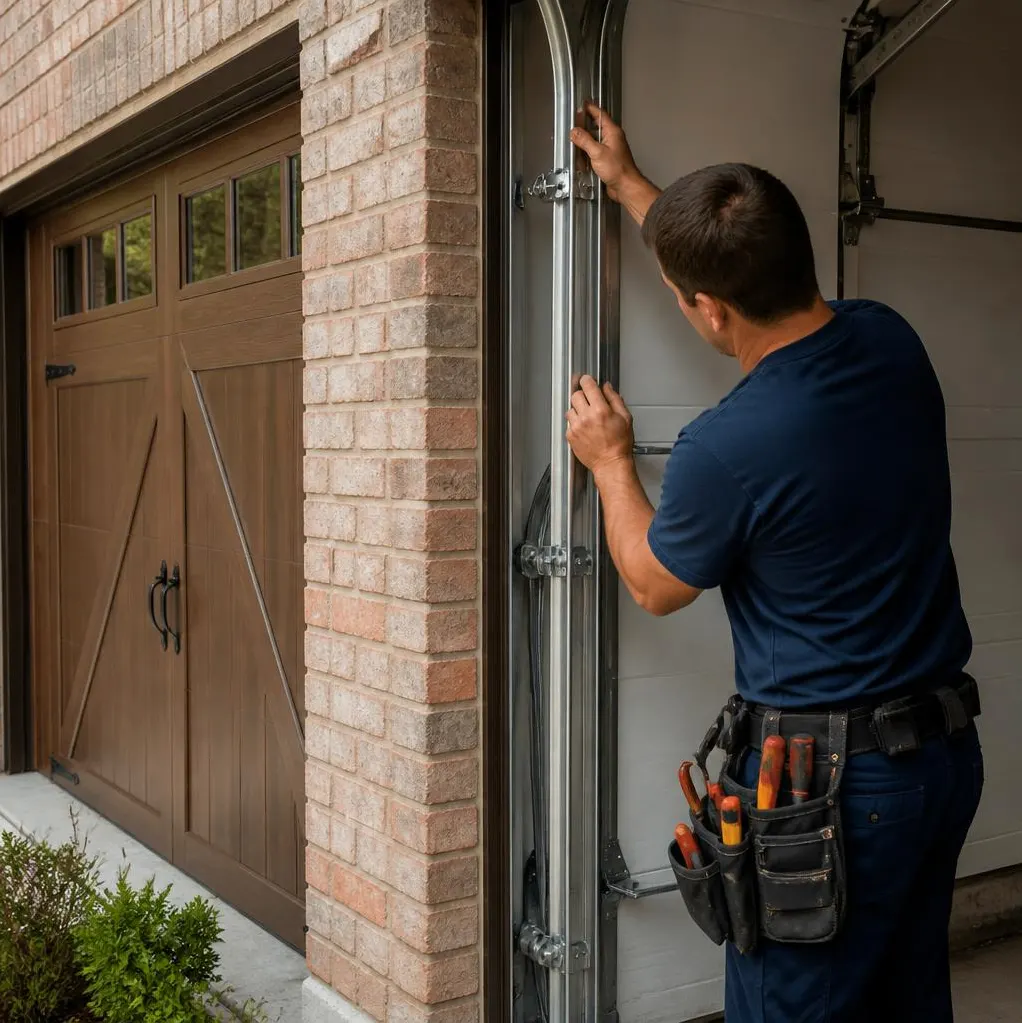
The call usually comes in the same way: a tropical system is in the Gulf, and a homeowner finally wants someone to look at a garage door that has been "acting up" for months. On arrival, the pattern repeats across Tallevast, Bradenton, and Palmetto driveways alike. The rollers are caked in a gritty rust film from salt-laden air. The bottom panel has a faint water line and a slight bow from sitting in standing water during last year's afternoon downpours. The springs are original to a house built a decade ago, stretched and pitted, clearly past their service life. None of this is dramatic on a calm day. Under sustained wind load, though, these are exactly the weak points that let a door buckle, pop off its track, or blow inward.
Why the Garage Door Is Your Home's Weakest Wall
A garage door is the largest moving opening in most houses, and unlike a wall, it is not a solid, continuous structure. It is a series of panels held together by hardware, hung on tracks, and tensioned by springs. When high wind hits a closed house, pressure builds. A solid wall resists that pressure evenly. A garage door only resists it as well as its weakest roller, hinge, or track bracket. If the door fails first, wind can rush into the garage and push outward on the roof and walls from the inside, which is a major cause of structural failure in wind events. This is why building codes in wind-prone areas like ours specify wind-load ratings for garage doors, and why an older, non-rated door is a real liability once storm season ramps up.
Humidity and Salt Air Make the Problem Worse
Even outside of an active storm, the daily climate here works against your door. Humidity swells wood doors and composite panels, which can throw off the fit in the tracks. Salt air accelerates corrosion on springs, hinges, and roller bearings faster than it would further inland. Afternoon downpours mean water pools near the threshold more often than homeowners realize, slowly rusting the bottom bracket and track anchors from below. None of these issues cause a sudden failure on their own, but they weaken the exact components a door depends on when wind pressure spikes.
A Practical Pre-Storm Checklist
Before the next system tracks toward the Gulf coast, walk through these steps. Most take less than twenty minutes.
- Inspect the springs and cables. Look for visible rust, gaps between coils, or fraying on the cables. A spring under tension that fails during a storm can cause the door to drop suddenly or lose balance entirely.
- Check the tracks and rollers. Run a hand along the track for dents or misalignment, and spin each roller to see if it moves freely or grinds. Rust and corrosion from salt air often show up here first.
- Test the weatherstripping and bottom seal. A cracked or missing seal lets wind-driven rain in during a downpour and signals the door isn't sitting flush, which matters under wind pressure.
- Verify the reinforcement struts. Many doors built for wind resistance have horizontal struts across the panels. If yours is an older door without visible bracing, it may not meet current wind-load expectations for this area.
- Test the manual release and battery backup. If the opener loses power during a storm, you should be able to manually operate the door without a fight. A battery backup on the opener also keeps it working through short outages.
- Lubricate moving parts. A light lubricant on hinges, rollers, and tracks reduces friction and slows the rust process that salt air and humidity accelerate.
- Look at the bottom panel for water staining or bowing. Standing water from heavy rain can warp lower panels over time, and a warped panel won't seal or brace correctly.
If you find more than one or two of these issues, it's worth treating the door as a system rather than patching individual parts. A worn roller next to a pitted spring next to a rusted track bracket is a combination that tends to fail together, not one at a time.
When to Call In a Professional
Some of this checklist is fine for a homeowner to do solo, but springs and cables are under serious tension and are not safe to adjust or replace without the right tools. If your inspection turns up rusted springs, a door that feels heavy or uneven when lifted manually, or a track that looks bent, that's the point to call Tallevast Garage Door Experts rather than keep testing it yourself. We handle Garage Door Spring Repair and Cable & Roller Replacement regularly ahead of storm season, and we can tell you quickly whether your current door and hardware are rated to handle the wind loads this area actually sees. If the door itself is older, undersized on bracing, or already showing panel damage, we also do full Garage Door Installation & Replacement with wind-rated options built for coastal Florida conditions, so you're not relying on a door that was never designed for this climate in the first place.
If you're in Tallevast, Bradenton, Sarasota, Palmetto, Ellenton, Lakewood Ranch, Oneco, or Whitfield and want your garage door checked before the next storm warning goes up, call Tallevast Garage Door Experts today. Same-day appointments are available, and a quick inspection now is a lot cheaper than an emergency repair during a wind event.